Celery stalks
Celery is the crunchy, fresh-aromatic stalk of the celery plant. The stalks are used raw or briefly cooked and often form the flavour base of soups, sauces and stews.
Latin name: Apium graveolens var. dulce
Plant family: carrot family (Apiaceae)
Origin: native to Eurasia and North Africa; later cultivated as a vegetable
Life cycle: biennial (usually grown as an annual)
Description
Celery consists of firm, ribbed stalks with a mild, herbal celery flavour and a juicy crunch. The leaves can also be used, for example in stock or as a fragrant garnish. Unlike celeriac, celery is mainly valued for its stalks rather than the root.
In the kitchen
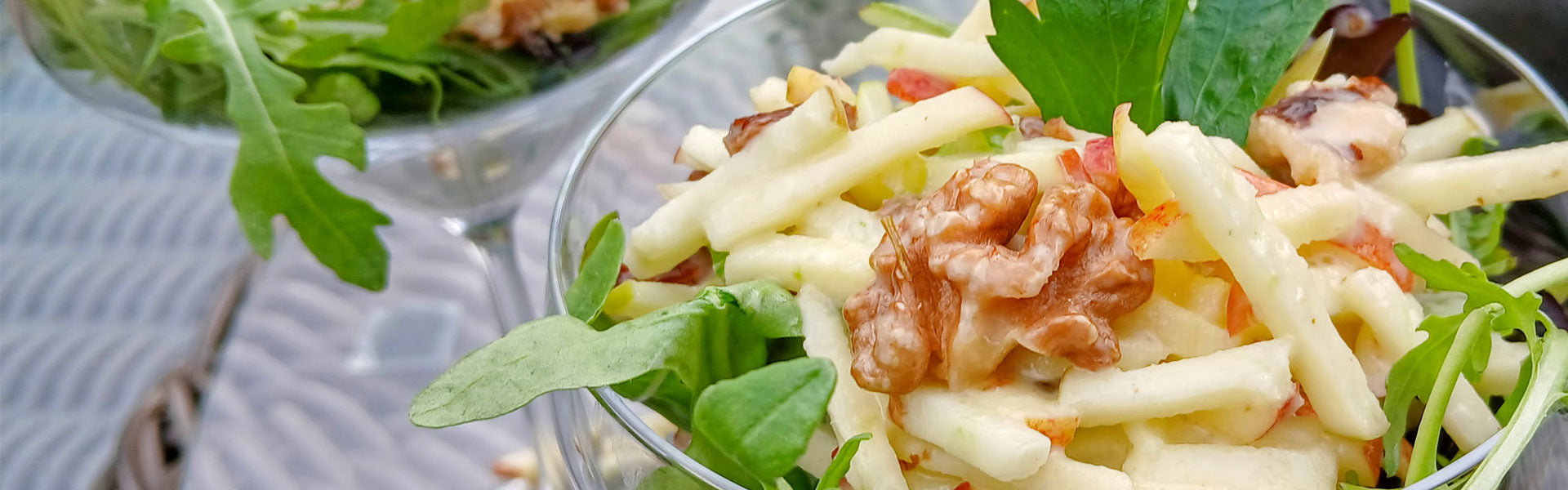
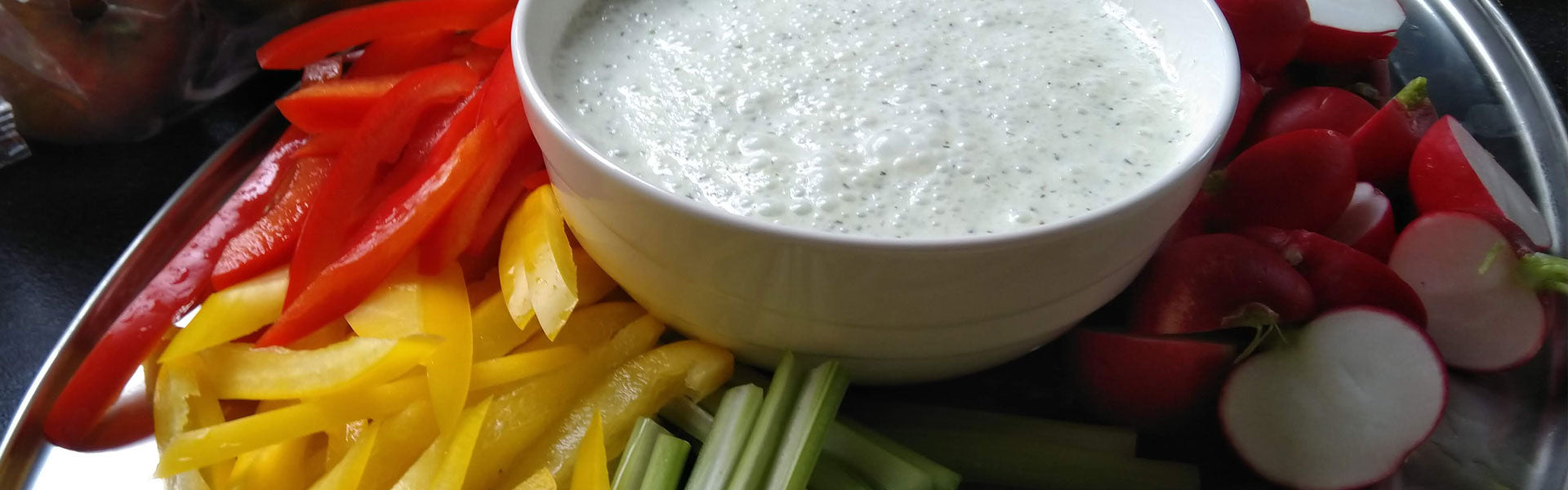
Celery works well in both fresh and warm preparations. Raw, it adds crunch to salads and fillings; when lightly cooked, it develops softer, savoury notes. Serve it raw as a snack with hummus or another dip, or finely chopped in tuna or chicken salad.
In warm dishes, celery acts as a flavour enhancer: briefly sauté it at the start of a soup or stew, or let it gently simmer in stock or broth. A classic combination is celery with carrot and onion as the base for countless dishes, known in French cuisine as mirepoix.
Storage & preparation
When buying celery, choose a firm, fresh bunch with crisp stalks and bright green leaves. Avoid limp stalks or brown spots. Store celery in the vegetable drawer of the refrigerator, preferably wrapped in foil or a lightly damp cloth; it will usually stay crunchy for 5–7 days.
If the stalks have become a bit limp, soak them in cold water for 10–20 minutes to restore their crunch. Always rinse celery well, trim off the base and, if needed, remove tough strings from the outside. Then slice into crescents or dice, or use the stalks whole. The leaves are also edible and work well in stock, herb butter or as a fine topping.
Note: celery is an EU-listed allergen and must be clearly indicated in ingredient lists.